Guide · Consumer units
Fuse boards.The cheapest safety upgrade most houses can have.
New fuse boards and consumer units are on A & P Moyes' installation list, and for most older houses around High Wycombe it is the single biggest safety improvement available for the money. Here is what is actually wrong with the old ones, what happens on the day, and how to tell whether yours is due.
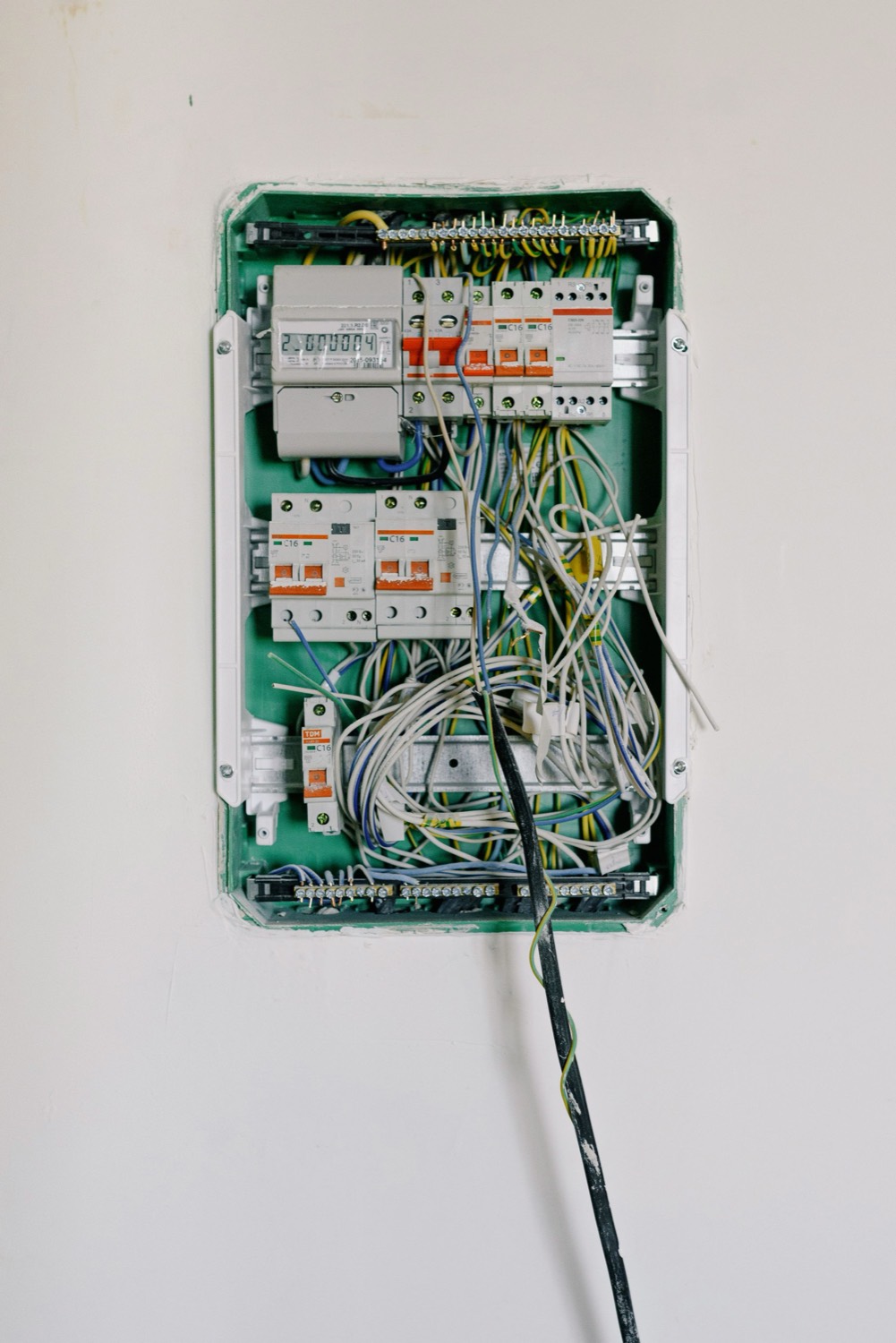
Five signs yours is due
It has rewireable fuses
A board with porcelain or plastic fuse carriers and fuse wire belongs to the 1960s and 70s. It has no RCD protection at all, which means nothing at that board will save you from a shock — and if you have ever been tempted to put a thicker bit of wire in to stop it blowing, that is precisely the risk the modern board removes.
One RCD covers the whole house
Plastic boards from the 1990s and 2000s often have a single RCD, or two at best. One fault anywhere — a perished cable in the loft, a failing appliance — takes out half the house including the freezer, and finding which circuit caused it means a slow process of elimination in the dark. Modern boards give each circuit its own protection.
It is plastic, and it is in the hall
Since 2016 consumer units in domestic premises have had to have a non-combustible enclosure, which in practice means steel. An ageing plastic board on an escape route is exactly the scenario that rule was written for.
Nothing is labelled, or the labels are fiction
If nobody in the house knows which way feeds the kitchen, nobody can isolate anything safely in a hurry. Labels that were accurate before an extension, a garage conversion and a new kitchen are worse than no labels at all.
It trips for no reason you can find
Nuisance tripping is rarely nuisance. It usually means moisture, a deteriorating cable or a failing appliance, and on an older board there is no way to narrow it down. A board change is often done alongside fault finding rather than instead of it.
What actually happens on the day
It gets looked at first
Before anything is quoted: what supply arrangement the property has, the condition of the earthing and main bonding, how many circuits there really are and what state they are in. A board change on top of tired wiring is a waste of money, and you would be told so.
Power off, old board out
The supply is isolated and the existing board removed. This is the part of the day that surprises people — the wall behind forty years of accumulated cable is rarely tidy, and the circuits usually need identifying properly before anything is reconnected.
New unit, circuits tested in
A steel consumer unit with protection per circuit, earthing and main bonding brought up to standard at the same time. Every circuit is tested as it goes back in, rather than everything being energised at the end and hoped for.
Labelled, certificated, explained
Every way labelled so the next person who opens the cupboard knows what is what, the notifiable work certificated, and two minutes spent showing you which switch does what and what to do if something trips at eleven at night.
The questions everyone asks
- How long does it take?
- Most straightforward domestic changes are a day, with the power off for a good part of it. Larger properties, or boards where the existing circuits need untangling and identifying, can run longer — you would be told which yours is likely to be before the date is booked.
- Will my old wiring pass on the new board?
- Not always, and it is better to know beforehand. Modern protective devices are more sensitive than what they replace, so tired cabling that limped along quietly can start tripping the moment it is properly protected. That is why the installation gets tested before the quotation rather than after.
- Do I need a full rewire instead?
- Sometimes, but far less often than people fear. A rewire is about the condition and layout of the cabling in the walls; a board change is about protection at the origin. Plenty of houses with sound wiring only need the board, and you should expect a straight answer about which yours is.
- Is it notifiable?
- Yes — replacing a consumer unit is notifiable work under Part P in England and Wales, and it is certificated on completion. Keep the paperwork: it is what a buyer's solicitor asks about.
- Can it be done out of hours?
- Out-of-hours appointments are available on request, which is often the answer for businesses and for households where the only time the cupboard can be emptied is the weekend.
Have a look at yours
If you are not sure what you have got, send a photograph of the front of the board on WhatsApp and you will get a straight answer about whether it needs anything — very often the answer is that it is fine for now. Quotations are free and carry no obligation.